The most courageous thing Zakiyya Karim has done in business had nothing to do with money, manufacturing or margins. It was standing in front of a camera. Having the courage to be seen is a small act that says everything about how the Cape Town creative built her lifestyle brand; repeatedly deciding that the vision was worth more than validation.
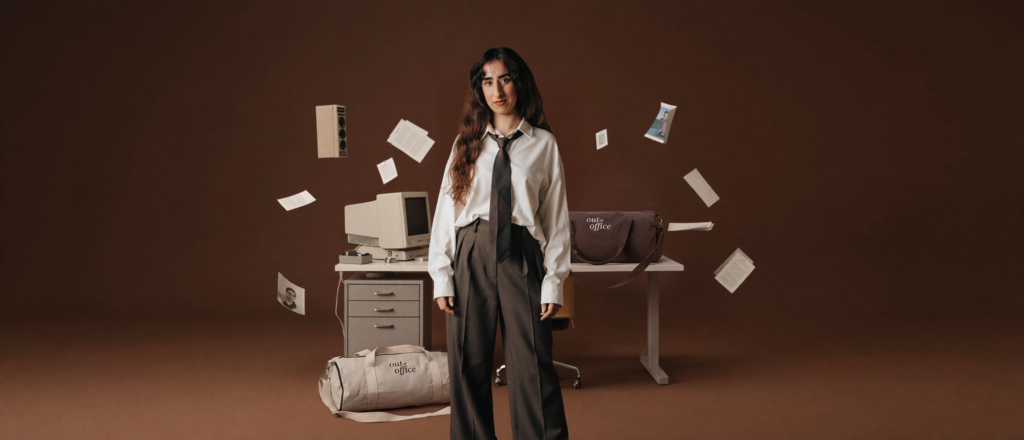
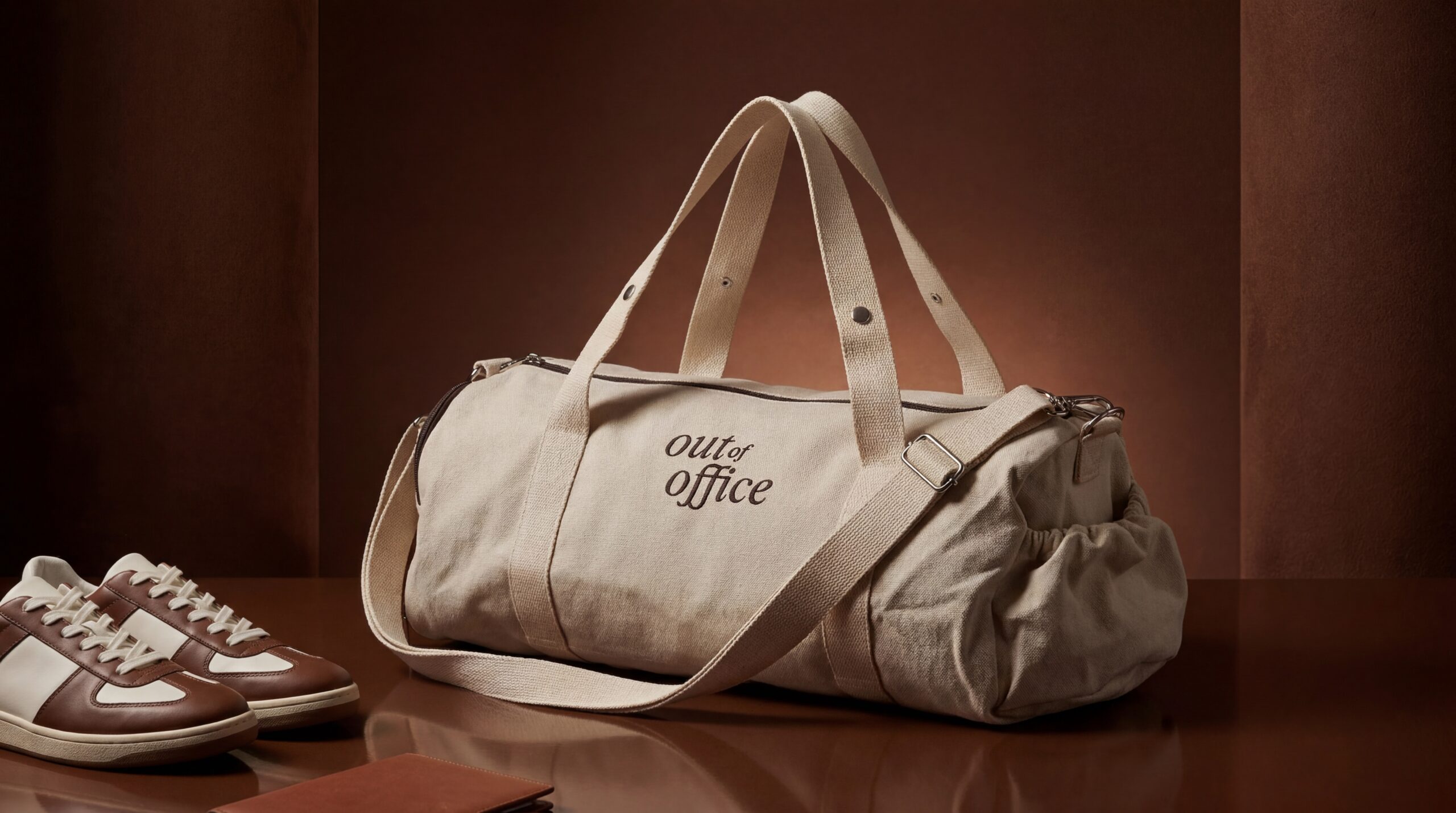
‘Out of Office’ launched in April 2026 with a single product, a locally designed and manufactured carry-all built to move from a Pilates class to a full workday to a flight without belonging to any one of those places. A hidden shoe compartment, yoga mat straps, an internal bottle holder and a waterproof lining are all there for the same reason: Karim needed them.
We recently had a chat with Zakiyya about founder resilience, navigating obstacles, backing herself and more. Check out our chat below:
1. You have a strong background in brand building; what was it that made you want to build your own?
After years of building brands, campaigns and visual worlds for other people, I started to feel a real pull to create something of my own. Working in the creative industry teaches you how to think strategically, how to tell stories and how to make things feel desirable, but there is something very different about applying that thinking to your own idea.
Out of Office came from that desire to build something tangible. I have always loved fashion and product, but I also knew that clothing can be complicated because fit, sizing and body confidence are so personal. A bag felt like a more universal starting point: something functional, expressive and part of someone’s everyday life.
I wanted to create a brand that reflected my own taste and the way people actually move through their day. It was less about launching a product for the sake of it and more about asking: what would I create if I finally backed my own vision?
2. What is the heart behind Out of Office?
The heart behind Out of Office is the belief that we are more than what we do. So much of our identity can become tied to work, productivity and job titles, especially when you are ambitious or building something. But life also happens in the moments outside of work: going to Pilates, meeting a friend for coffee, travelling, running errands, resting, creating, moving and just being yourself.
Out of Office is about making space for that life. It is not anti-work or anti-ambition. It is about remembering that ambition should exist alongside joy, movement, rest and personal expression.
The bag is the first product in that world, but the heart of the brand is really about supporting a fuller life, one that does not only exist at a desk.
3. What made you decide to make Out of Office a founder-led brand?
At first, I think I was nervous to put myself at the centre of it. I am used to being behind the work, not necessarily in front of it. But the more I built Out of Office, the more I realised that the story was personal. The brand came from my own frustration, my own lifestyle and my own need to remind myself that I am more than my work.
Making it founder-led felt honest. People connect to people before they connect to products, especially when a brand is new. I also think there is power in showing the reality behind building something: the mistakes, the uncertainty, the problem-solving, the small wins and the emotional parts that people do not always see.
For me, being visible is not about making the brand only about me. It is about giving people a human entry point into the world of Out of Office while the brand continues to grow into something bigger than me.
4. How much of the brand is a reflection of what you personally needed to hear or experience at that point in your life?
A lot of it is a reflection of what I needed to hear. I was in a phase where so much of my energy was going into work, clients and service-based creativity. When you are always creating for other people, it can start to feel like you are giving away so much of yourself.
Out of Office became a reminder that I was allowed to build something for myself too. The name itself felt like a small rebellion against the idea that your value is only connected to your output.
I needed to hear that I could be ambitious and still have a life. That I could build something and still rest. That I could take myself seriously before everyone else did. In many ways, the brand became the message I needed at that moment.
5. How do you distinguish between useful business criticism and the self-doubt that can stop founders from backing themselves?
I am still learning this, but I think useful criticism usually gives you something to work with. It might be uncomfortable, but it points you towards a clearer decision, a better question or a practical next step. Self-doubt, on the other hand, often just makes everything feel impossible.
When someone says, “I don’t understand who this product is for,” that is useful. It means I need to sharpen the audience or the messaging. But when the thought becomes, “Maybe I should not have done this at all,” that is usually fear talking.
I try to ask myself: is this feedback helping me refine the idea, or is it making me abandon myself? Founders need honesty, but they also need enough self-trust to know that not every difficult moment means the idea is wrong.
6. What did the six months of searching for the right manufacturing team teach you about the realities of building a physical product that you couldn’t have learned from your years in the creative industry?
It taught me that a physical product is a completely different kind of creative problem. In the creative industry, you can revise, redesign and re-export. With product, every decision has a physical consequence: the fabric, the webbing, the hardware, the lining, the pattern, the stitching, the timelines and the people making it.
Those six months taught me patience, but also how much can go wrong when something moves from idea to production. I learned that a beautiful concept is only one part of the process. You also need the right manufacturing partner, clear communication, proper sampling, quality control and a realistic understanding of timelines and costs.
It made me respect product businesses so much more. There is so much invisible labour behind something that looks simple.
7. You chose to manufacture Out of Office locally in Cape Town, despite acknowledging that it isn’t always the easiest or cheapest route. What does that mean to you beyond simply being a production decision?
Manufacturing locally was important to me because I wanted the product to have a real connection to where I am from and where the brand was born. It is not always the cheapest or easiest route, but it allows me to be closer to the process, to understand the people making the product and to build something with more intention.
Beyond production, it represents a belief in local capability. We have so much creative and manufacturing talent here, but it is not always easy to access or scale. Choosing local production was my way of saying that I wanted Out of Office to be part of that ecosystem, even with all its challenges.
It also taught me to be realistic. “Locally made” is meaningful to me, but it cannot be the only reason someone buys. The product still has to be desirable, functional and well-positioned. Local manufacturing is part of the story, but the product has to stand on its own.
8. The first Out of Office bag is designed around multiple parts of modern life: work, wellness, travel and everything in between. How do you define the modern consumer and the way we live?
I think the modern consumer lives in overlap. Our days are not as neatly separated as they used to be. Someone might go from a workout to a meeting, from work to dinner, from a flight to a coffee shop, or from running errands to working remotely. We are constantly moving between roles and spaces.
That is why the first bag was designed around more than one use case. I did not want it to feel like only a gym bag, only a work bag or only a weekender. I wanted it to reflect how people actually live carrying a laptop, shoes, water bottle, makeup, keys, clothes and all the little things that make up a full day.
The modern consumer wants things that are practical, but they also want them to feel good. Function alone is not enough. The product has to fit into their lifestyle, their identity and the way they want to move through the world.
9. You assembled an unofficial board of advisors across brand strategy, e-commerce, commercial and production. What made you realise that backing yourself doesn’t necessarily mean building alone?
Building Out of Office taught me very quickly that backing yourself does not mean pretending you know everything. In the beginning, I think I felt like I had to have all the answers because it was my idea and my responsibility. But the more challenges I faced, the more I realised how valuable it is to have different people who can help you see the business from different angles.
Some people are better at brand strategy. Some understand e-commerce. Some can give commercial perspective. Some understand production realities. Having access to those different minds helped me make better decisions and feel less alone in the process.
For me, backing myself now means taking the vision seriously enough to ask for the right support. It is still my responsibility, but it does not have to be built in isolation.
10. You’ve said that you wish you had started telling the Out of Office story earlier instead of waiting for everything to be perfect. What do you think founders and creatives lose when they only show the polished version of the journey?
I think they lose connection. When you only show the polished version, people see the final product but they do not understand the emotional, creative and practical journey that went into it. They do not see the risk, the mistakes, the decisions, the doubts or the moments where you almost gave up.
I used to think I had to wait until everything looked perfect before I could speak about it. But now I realise that the process is often what makes people care. It gives them a reason to root for you.
Showing the journey also helps other founders and creatives feel less alone. There is so much pressure to look successful before you have even figured things out. But building is messy. The polished version is only one part of the story.
11. The creator economy has made personal branding increasingly important for founders. Where do you draw the line between founder visibility and the brand standing on its own and living beyond yourself?
I think founder visibility is especially powerful at the beginning because it creates trust and context. When people do not know the brand yet, the founder can help explain the world, the values and the reason the product exists.
But I do not want Out of Office to only work because I am visible. The goal is for the brand to eventually become a world that other people can see themselves in. Founder-led does not mean founder-dependent.
For me, the line is: I can be the doorway, but the customer has to become the main character. The brand should grow through the people who carry it, use it, style it, travel with it and make it part of their own lives.
12. What has entrepreneurship forced you to develop more of?
Resilience, discernment and self-trust.
Resilience, because things go wrong all the time and you have to keep moving. Discernment, because not every opportunity, opinion or piece of advice is right for you. And self-trust, because there are so many moments where you have to make decisions without complete certainty.
Entrepreneurship has also forced me to become more comfortable with being a beginner. Even with a background in brand building, there were so many parts of product, manufacturing, pricing, shipping and retail that I had to learn in real time. That has been humbling, but also empowering.
13. You’re expanding beyond the original bag into accessories, merchandise and The 5 to 9 Club. What is the bigger world you’re ultimately trying to build around Out of Office?
The bigger world is about life outside of work. The bag was the starting point, but I see Out of Office becoming a lifestyle brand and community. That could include accessories, pouches, laptop sleeves, travel pieces, apparel, limited drops and collaborations. But I want every product to feel connected to the same philosophy: useful, elevated, intentional and made for movement between work, wellness, travel and everyday life.
The 5 to 9 Club is part of that bigger vision. It is about building community around the hours outside the traditional workday to explore and build parts of themselves that are not defined by work. Ultimately, I want Out of Office to be both a product brand and a cultural space for people who are building full, interesting lives.
14. If someone reading this is sitting on an idea because they’re waiting for more money, more confidence, more validation, or the ‘right moment,’ what would you tell them about backing themselves before anyone else does?
I would tell them that confidence usually comes after action, not before it. If you wait until you feel completely ready, you may wait forever.
That does not mean you should be reckless, but it does mean you should take the first serious step. Test the idea. Make the sample. Share the story. Ask the question. Start smaller than you think you need to, but start.
I have learned that backing yourself is not always a big dramatic moment. Sometimes it is simply deciding that your idea deserves a chance before the world has validated it. You can learn, adjust and refine as you go. But you cannot build anything if you don’t start!

15. A popular actress recently sold a majority stake in her luggage brand. Many fans of the brand felt it should have been sold for more. Do you think luggage brands have a ceiling compared to beauty or beverage brands? How much of this is of importance to you?
I love BÉIS, and I think what Shay Mitchell built is incredibly impressive. What I admire most is that BÉIS never felt like “just luggage” it felt like a travel lifestyle brand with a clear point of view, a strong community, and products that solved real problems in a way that still felt desirable.
I do think luggage and bags can have a different growth curve to categories like beauty or beverages, simply because they are not always repeat-purchase products in the same way. Someone might buy mascara every few months, but they are not replacing a suitcase or carry-all every month. So in that sense, the category does require a different kind of thinking.
But I don’t necessarily believe that means luggage brands have a ceiling. I think the ceiling comes when a brand only sees itself as a product category. If it is just “a bag,” then yes, there may be a limit. But if it becomes a lifestyle, a community, a design language and a way people identify themselves, then the opportunity becomes much bigger.
That is how I think about Out of Office. The bag is the first product, but the bigger vision is not to only sell bags. It is to build a brand around the life people live outside of work movement, wellness, travel, creativity, ambition, rest and everything in between. For me, the long-term value is not just in the object itself, but in the world we build around it.
So while exits and valuations are interesting, they are not the main thing I am focused on right now. I am much more focused on building something people feel connected to, something that can grow beyond one product, and something that has enough meaning to live in different categories over time.